Why Containerized Paint Booths Outperform Inflatable Systems for Military and Industrial Applications
When military maintenance operations require mobile coating capabilities outside fixed facilities, equipment reliability isn't just convenient, it's mission critical. Inflatable paint booths have emerged as a low-cost alternative to traditional spray booths, but their fundamental design limitations create serious compliance risks, safety concerns, and operational failures that can ground aircraft and endanger personnel.
If you're responsible for maintaining military equipment, choosing the right mobile paint booth system could mean the difference between sustained readiness and costly downtime. Here's what you need to know about inflatable versus containerized paint booth systems, and why one choice protects your mission while the other puts it at risk.
The Appeal (and Reality) of Inflatable Paint Booths
Inflatable paint booths look attractive on paper. They promise lower upfront costs, portability, and the flexibility to set up temporary coating operations anywhere you need them. For commercial applications with minimal regulatory oversight, they might suffice. But when you're coating military aircraft, working with hexavalent chromium primers, or operating under NESHAP 319 regulations, "good enough" isn't good enough.
Here's what inflatable booth manufacturers don't tell you:
Inflatable systems rely on continuous air pressure to maintain structural integrity. That soft-wall construction, typically PVC or vinyl, creates vulnerabilities that become critical failures in real-world military maintenance environments. A single puncture from a ladder, scaffold, hand tool, or aircraft component compromises the entire booth, contaminating the work environment and exposing your personnel to hazardous materials.
Even when deployed inside hangars where they're supposedly protected from weather, inflatable booths face constant contact with the very equipment they're meant to contain; rolling toolboxes, air hoses, maintenance stands, and the sharp edges of aircraft components all create puncture risks. And unlike a torn tarp you can patch and forget, a compromised inflatable paint booth creates an immediate environmental and safety violation.
The Hidden Compliance Crisis: Hexavalent Chromium
Here's the technical reality most inflatable booth manufacturers hope you won't understand: Many military coating operations generate hexavalent chromium (Cr6+) particulates in the 2-3 micron range, particles so small they're invisible to the naked eye but can be deadly over time. This known carcinogen requires strict containment under NESHAP 319 regulations, and the consequences of non-compliance extend far beyond fines.
Standard overspray filters cannot reliably capture particulates this small.
Many inflatable paint booth systems use basic overspray filters designed for larger particles, typically 10 microns and above. These filters catch the visible paint mist you can see, giving the illusion of effective filtration. But they allow sub-3 micron hexavalent chromium particles to pass right through, exposing your personnel to carcinogenic materials and creating environmental violations you may not discover until someone gets sick years later.
The soft-wall construction of inflatable booths compounds this problem. Without rigid walls, you cannot engineer proper airflow patterns or maintain the negative pressure differential required for hazardous material containment. Pressure fluctuations from door openings, wind loading, or minor leaks disrupt capture velocity, allowing contaminated air to escape into the surrounding work area.
Translation:
Your inflatable booth might look like it's working, but it could be silently exposing your team to cancer-causing materials every single day.
Structural Integrity: When "Good Enough" Kills the Mission
Military maintenance operations don't happen in controlled laboratory conditions. They happen in hangars full of equipment, on flight lines exposed to weather, and in forward operating environments where "ideal conditions" don't exist. Inflatable paint booths are designed for ideal conditions that rarely materialize in real-world operations.
Consider real world scenarios:
A maintainer leans a ladder against the booth wall to access an aircraft tail section. The pressure point creates a small tear. Now your booth pressure drops, your airflow pattern collapses, and you've just contaminated your entire paint job with particulates from the surrounding environment. The coating fails specification, the part gets rejected, and your mission timeline just slipped by days, weeks or longer.
Or this:
You're operating in a region where temperatures swing from freezing nights to scorching days. The PVC material of your inflatable booth expands and contracts, stress points develop, and seams begin to fail. By the time you notice the problem, you've been operating out of compliance for weeks, your personnel have been breathing contaminated air, and you're facing potential regulatory citations that could shut down your entire operation.
Containerized paint booth systems eliminate these failure modes entirely.
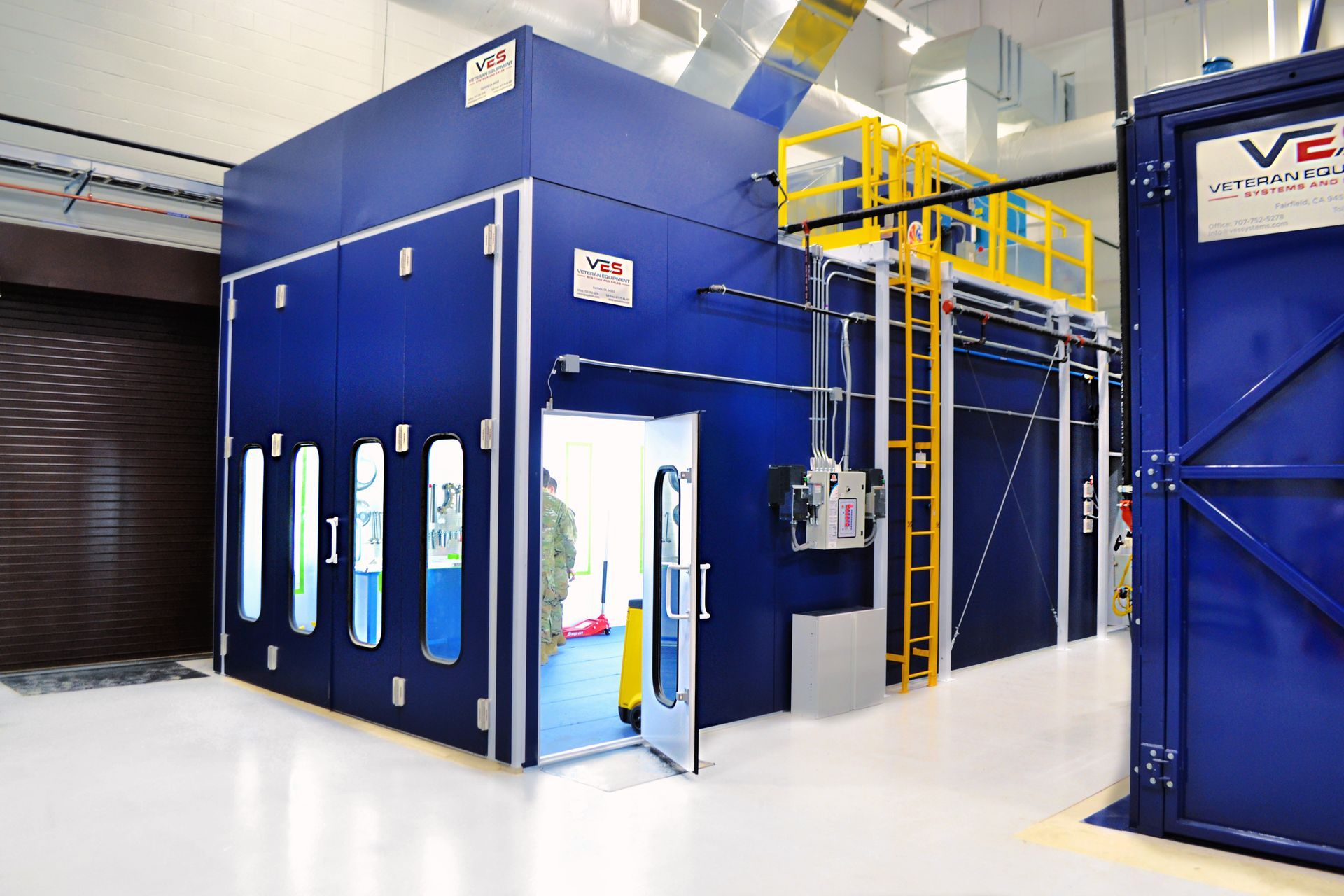
Built inside reinforced ISO containers with 14-gauge steel construction, VES containerized systems deliver permanent structural integrity that doesn't depend on air pressure, doesn't tear when contacted by equipment, and doesn't degrade under temperature extremes. The rigid steel walls eliminate concerns over seam failures, punctures in the structure from interaction with common maintenance behaviors, as well as support proper ducting, stable airflow patterns, and the mechanical systems needed for true NESHAP 319 compliance.
The Three-Stage Filtration Array Advantage
NESHAP 319 compliance isn't about checking a box, it's about protecting the people who maintain our aircraft and preserving the environment. VES containerized paint booth systems achieve this through engineered three-stage filtration that inflatable systems simply cannot replicate.
Stage 1:
Primary Filtration Bulk overspray and larger particulates (10+ microns) are captured in the first stage, protecting downstream filters, and extending system life. This is where inflatable booth filtration typically stops in many cases.
Stage 2:
High-Efficiency Secondary Filtration This is where containerized systems separate themselves from inflatable alternatives. Secondary filters rated MERV 13-16 capture fine particulates in the 2-10 micron range, the size range that includes hexavalent chromium. This stage removes the invisible carcinogens that standard overspray filters miss.
Stage 3:
Pocket Style Final Filtration The third stage pocket filters in VES NESHAP 319-compliant paint booth systems represent the final barrier for capturing fine and ultra-fine particulates before exhaust air is released to the atmosphere. These high-efficiency filters are specifically engineered to capture hexavalent chromium (Cr6+) particulates at 2-3 microns and smaller, ensuring full compliance with EPA regulations and protecting both personnel and the environment.
The result:
Air leaving an inflatable booth with standard overspray filters can often times contaminate your environment with the very materials you're trying to contain.
Total Cost of Ownership: The $335,000 Mistake
Inflatable paint booth manufacturers lead with purchase price. "Why spend $120,000-$150,000 on a containerized system when you can get an inflatable booth for $50,000?" It's a compelling pitch, until you look at what happens over the next ten years.
The real cost of inflatable systems:
• Initial Purchase: $50,000
• Replacement Cycle: 2-5 years under ideal conditions (less in field use)
• Replacements (10 years): $100,000 (two complete replacements)
• Maintenance and Repairs: $75,000 (constant patching, blower repairs, component failures)
• Energy Costs: $60,000 (continuous blower operation)
• Compliance Fines: $50,000 (estimated citations for violations)
• Hidden Costs: Mission delays, failed coatings, personnel exposure liability
Total 10-Year Cost: $335,000+
The real cost of containerized systems:
• Initial Purchase: $125,000 to $150,000 (based on container size and options)
• Replacement Cycle: 20+ years (none needed in 10-year horizon)
• Maintenance: $25,000 (minimal protected mechanical systems)
• Energy Costs: $30,000 (efficient design, no continuous blowers)
• Compliance Fines: $0 (proven compliance eliminates risk)
• Hidden Costs: Near zero (reliable operation prevents mission delays)
Total 10-Year Cost: $205,000
Containerized systems cost ~39% less over ten years while delivering superior performance, guaranteed compliance, and zero unplanned downtime.
But the real cost isn't measured in dollars, it's measured in mission readiness and personnel health. What's the cost of grounding an aircraft because a paint booth failure contaminated a critical coating? What's the cost of a workers' compensation claim when a maintainer develops cancer from years of hexavalent chromium exposure? What's the cost to your career when an EPA inspection reveals your operation has been out of compliance for months?
Operational Reality: When Equipment Fails, Missions Fail
Let's talk about what actually happens when you choose an inflatable paint booth for military operations.
Scenario 1:
Environmental Failure: It's July in the Southwest. Temperatures hit 115°F on the flight line. Your inflatable booth's PVC material softens in the heat, seams begin to separate, and the structure starts to sag. You've got an aircraft with components that need to be coated and returned to service in 48 hours. Your booth is unusable. The aircraft misses its maintenance window. The mission gets delayed.
With a containerized system, you'd be operating normally. Steel doesn't care if it's 115°F or -40°F. Your mission continues.
Scenario 2:
Structural Failure: You're coating aircraft components in a busy hangar. A forklift operator misjudges clearance and clips your inflatable booth with a raised pallet. The booth tears, pressure drops, and suddenly you're spraying in an uncontrolled environment. Not only is your current coating ruined, but you've just exposed everyone in the hangar to overspray and organic vapors. OSHA gets called. Your operation shuts down for investigation.
With a containerized system, the container wins the battle with a misguided raised pallet. Maybe you've got a paint scratch to touch up. Your operation continues.
Scenario 3:
Compliance Failure: An EPA inspector shows up for a surprise audit. Your inflatable booth has the required overspray filters, so you think you're compliant. The inspector asks about your filtration efficiency at 2-3 microns for hexavalent chromium capture. You can't provide documentation because your filters aren't rated for that particle size. Citation issued. Operations suspended until you can prove compliance.
With a containerized system, you hand the inspector your three-stage filtration documentation, pressure differential monitoring logs, and NESHAP 319 compliance certification. Inspection passes. Your operation continues.
Deployment Flexibility: Rapid Response When It Matters
One argument for inflatable booths is supposed deployment flexibility. "They're portable and quick to set up," the sales pitch goes. Reality tells a different story.
Inflatable booth deployment:
• Unpack components (multiple pieces)
• Assemble frame or anchoring system
• Unroll and connect booth material
• Set up external blower and filtration
• Inflate and test
• Connect electrical (often inadequate for hazardous environments)
• Setup time: 4-8 hours minimum, often longer
• Requires 2-4 people
• Weather-dependent (can't set up in high winds or inclement weather)
Containerized booth deployment:
• Position container on stable surface
• Connect utilities (electrical and compressed air)
• Install provided external exhaust ducting
• Power on and verify systems
• Operational time: 4-5 hours
• Requires 1-2 people plus equipment operator
• Weather-independent
But here's the real deployment advantage of containerized systems: You can pre-position them and store them without durability concerns.
Standard ISO containers move by truck, rail, ship, or military aircraft (C-17/C-5). You can forward-deploy containerized booths to operating locations before you need them, store them long-term without degradation, and relocate them as missions change. Try storing an inflatable booth for six months in a hot shipping container, if it's still usable when you unpack it, you'll be lucky.
Safety and Explosion Protection: Where Cutting Corners Costs Lives
Paint booths create environments filled with flammable vapor, organic solvents, and ignition sources. The National Fire Protection Association (NFPA 33) has strict requirements for equipment operating in these conditions, requirements that inflatable booths struggle to meet.
Electrical systems in flammable environments must be explosion-proof rated Class I, Division 1 for Groups C and D vapors. This isn't optional. It's life safety.
Inflatable booths typically use standard electrical components with minimal explosion protection. Why? Because proper explosion-proof fixtures, wiring, and controls are heavy, rigid, and expensive, characteristics incompatible with lightweight inflatable construction. The soft-wall design also makes proper grounding difficult, increasing static discharge ignition risk.
VES containerized systems incorporate Class I, Division 1 explosion-proof electrical systems as standard equipment. Every light fixture, every switch, every electrical connection is rated for flammable vapor environments. The steel structure provides continuous grounding, eliminating static discharge risk. Fire suppression systems can be integrated directly into the container structure.
When you're working with materials that can ignite from a spark, "close enough" on electrical safety isn't acceptable.
The SDVOSB Advantage: More Than Just a Certification
When you choose a containerized paint booth from VES, you're not just buying superior equipment, you're partnering with a Service-Disabled Veteran-Owned Small Business that understands military operations because we've lived them.
We know what happens when equipment fails in the field. We know what "mission-critical" actually means. We know that the standards we learned in uniform, attention to detail, refusal to accept "good enough," commitment to the people depending on our work, don't end when we take off the uniform.
That's why we engineered containerized systems that eliminate the failure modes we see in inflatable booths. That's why we over-build filtration systems to guarantee compliance even when conditions aren't perfect. That's why we use steel construction that survives real-world abuse instead of materials that fail under routine contact.
We build equipment the way we'd want it built if we were still wearing the uniform, because the people using it are still wearing that uniform.
What Military Programs Are Learning the Hard Way
If you're reading this because your C-130 program, F-16 maintenance operation (or any aircraft for that matter) facility is having problems with inflatable paint booths, you're not alone. We're hearing the same story from programs across all services:
• Booths that don't last the promised 3-5 years
• Constant repairs and downtime
• Compliance concerns that keep environmental officers awake at night
• Personnel exposure worries that create liability
• Mission delays from equipment failures
The programs solving these problems aren't patching inflatable booths or buying better PVC, they're transitioning to containerized systems that eliminate the problems entirely.
The Bottom Line: Mission Readiness vs. Mission Risk
Every equipment decision comes down to priorities. If your priority is the lowest possible purchase price, inflatable paint booths will always win. But if your priorities are:
• Protecting personnel from carcinogenic exposure
• Maintaining guaranteed NESHAP 319 compliance
• Ensuring mission readiness through reliable equipment
• Reducing long-term costs through durable construction
• Operating safely in all environmental conditions
Then containerized paint booth systems aren't just better, they're the only choice.
Making the Right Decision for Your Operation
If you're evaluating mobile paint booth options, ask these questions:
About Filtration:
• What is the capture efficiency at 2-3 microns for hexavalent chromium?
• Can the manufacturer provide third-party test data?
• How is filtration efficiency maintained as filters load?
• What monitoring systems verify continuous compliance?
About Structural Integrity:
• What happens if the booth is punctured or torn?
• Can the structure withstand routine maintenance activity contact?
• How does temperature affect structural integrity?
• What is the realistic service life under field conditions?
About Total Cost:
• What is the true 10-year cost including replacements and maintenance?
• What are the consequences of compliance failures?
• What does mission downtime cost when the booth fails?
About Safety:
• Are electrical systems properly rated for flammable vapor environments?
• How is proper grounding achieved and verified?
• Can the booth integrate with fire suppression systems?
• What happens to personnel safety if the booth fails during operation?
If the answers don't give you complete confidence, you're looking at the wrong system.
Don't Risk Your Mission on Equipment That Fails When You Need It Most
The choice between inflatable and containerized paint booths isn't about budget, it's about priorities. Inflatable systems offer lower initial cost in exchange for compliance risk, operational unreliability, and personnel exposure. Containerized systems deliver mission assurance through proven performance.
When lives depend on aircraft readiness and personnel safety is non-negotiable, the decision is clear.
Request your consultation today and discover why programs nationwide are transitioning from inflatable to containerized paint booth systems.
Veteran Equipment Sales provides containerized NESHAP 319-compliant paint booth systems that deliver:
• Three-stage NESHAP 319 filtration
• Steel construction surviving 20+ years in all environments
• Rapid deployment with 2-4 hour setup time
• Class I, Division 1 explosion-proof electrical systems
• Proven compliance eliminating regulatory risk
• Total cost of ownership lower than inflatable alternatives
Contact us for:
• Technical specifications and compliance documentation
• Total cost of ownership analysis for your specific application
• Site assessment and deployment planning
Veteran Equipment Systems and Sales: A Service-Disabled Veteran-Owned Small Business, with Factories Located in Nampa and Fruitland Idaho
Website: www.vessystems.com
Related Articles You Might Find Helpful:
• Understanding NESHAP 319 Compliance: What Every Maintenance Officer Should Know
• The Hidden Danger of Hexavalent Chromium in Military Coating Operations
• Total Cost of Ownership: Why the Cheapest Paint Booth Costs the Most
Author Bio: Daniel Myers is the founder and president of Veteran Equipment Sales, a Service-Disabled Veteran-Owned Small Business specializing in NESHAP 319-compliant paint booths, precision blast systems, and Hexavalent Chromium Elimination/Abatement Products for military and industrial applications. With 20 years of military service, 15 years of military depot experience, and 10 years leading VES, Dan brings firsthand understanding of the equipment reliability and personnel protection standards required in defense and commercial operations.
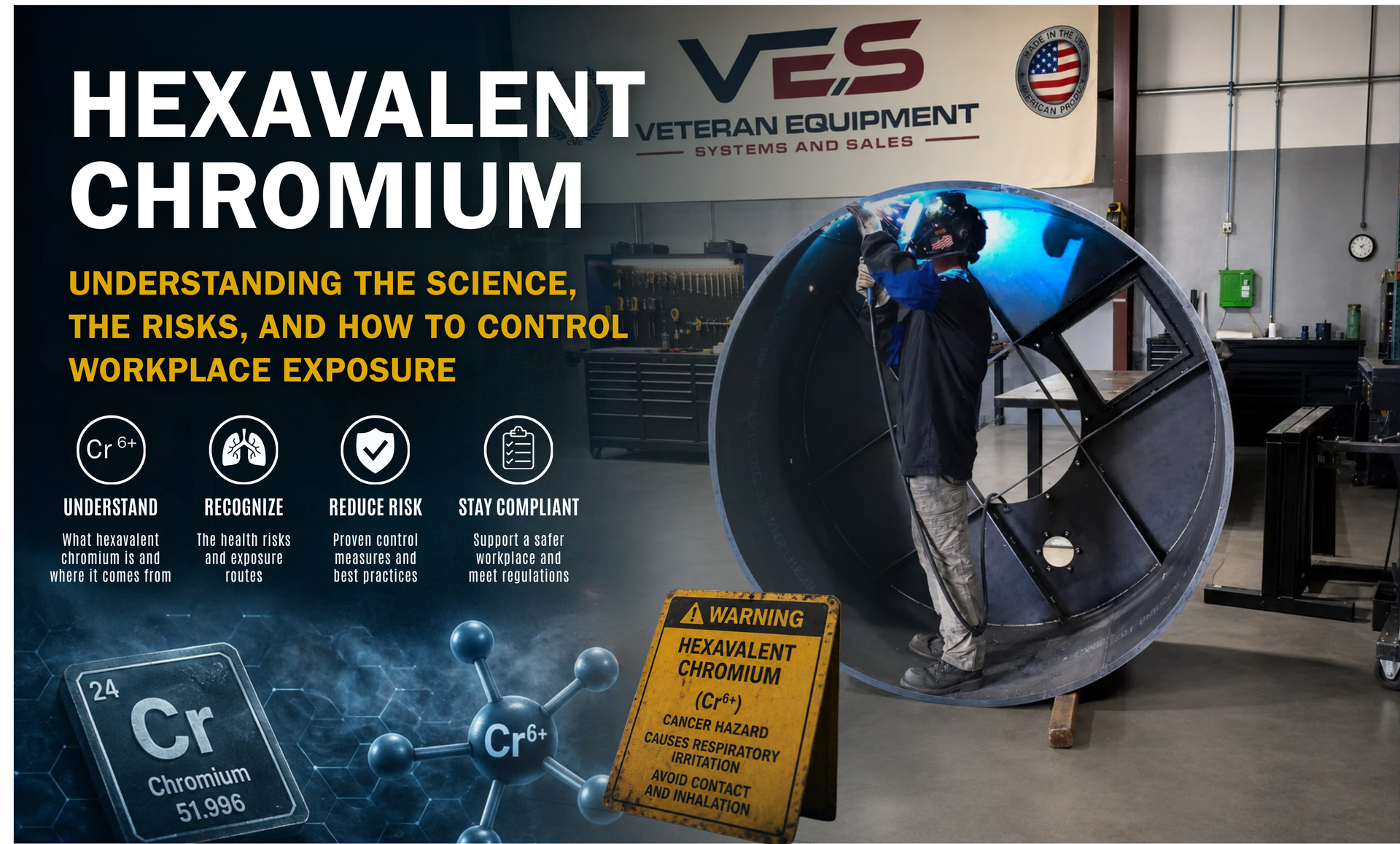
Learn what hexavalent chromium is, its health risks, where exposure occurs, and how to detect, control, and decontaminate Cr(VI) in the workplace.
Why Containerized Paint Booths Outperform Inflatable Systems for Military and Industrial Applications
DLA Fulfillment – Paint Booths (Anticipated Award 2026)
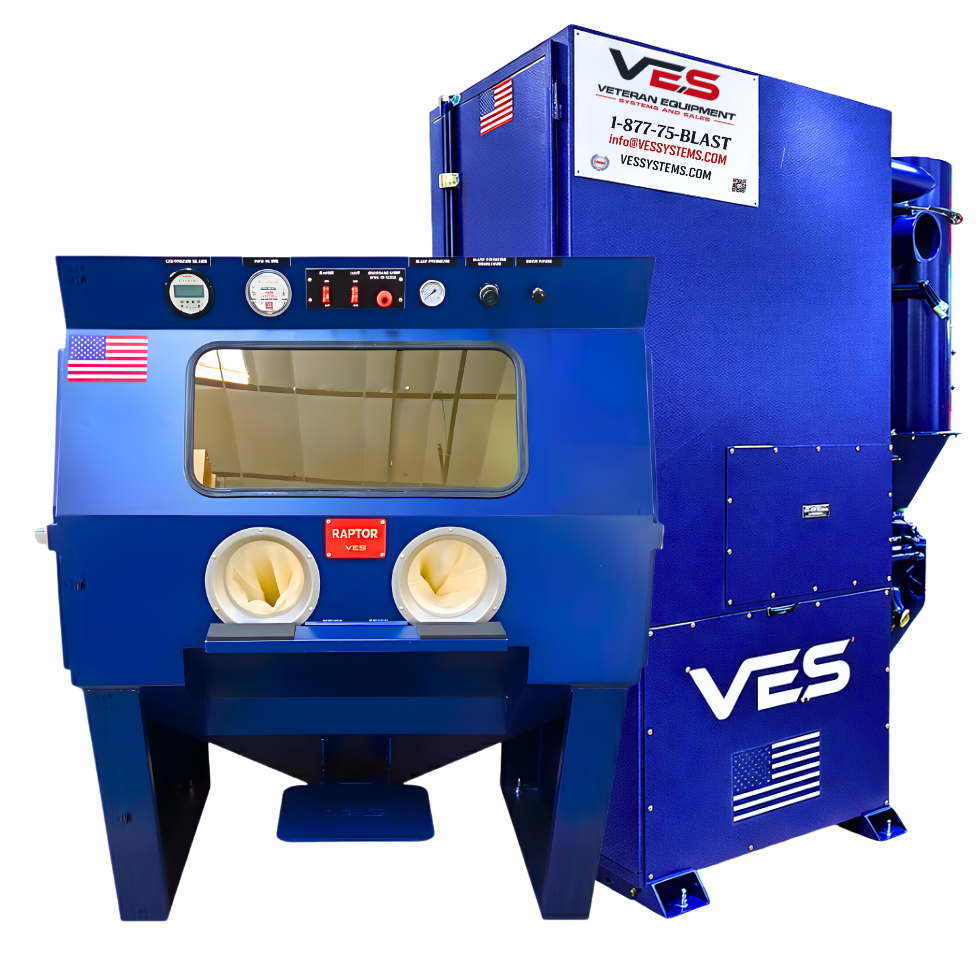
DLA Fulfillment – Raptor Series Blast Cabinets (Ongoing)
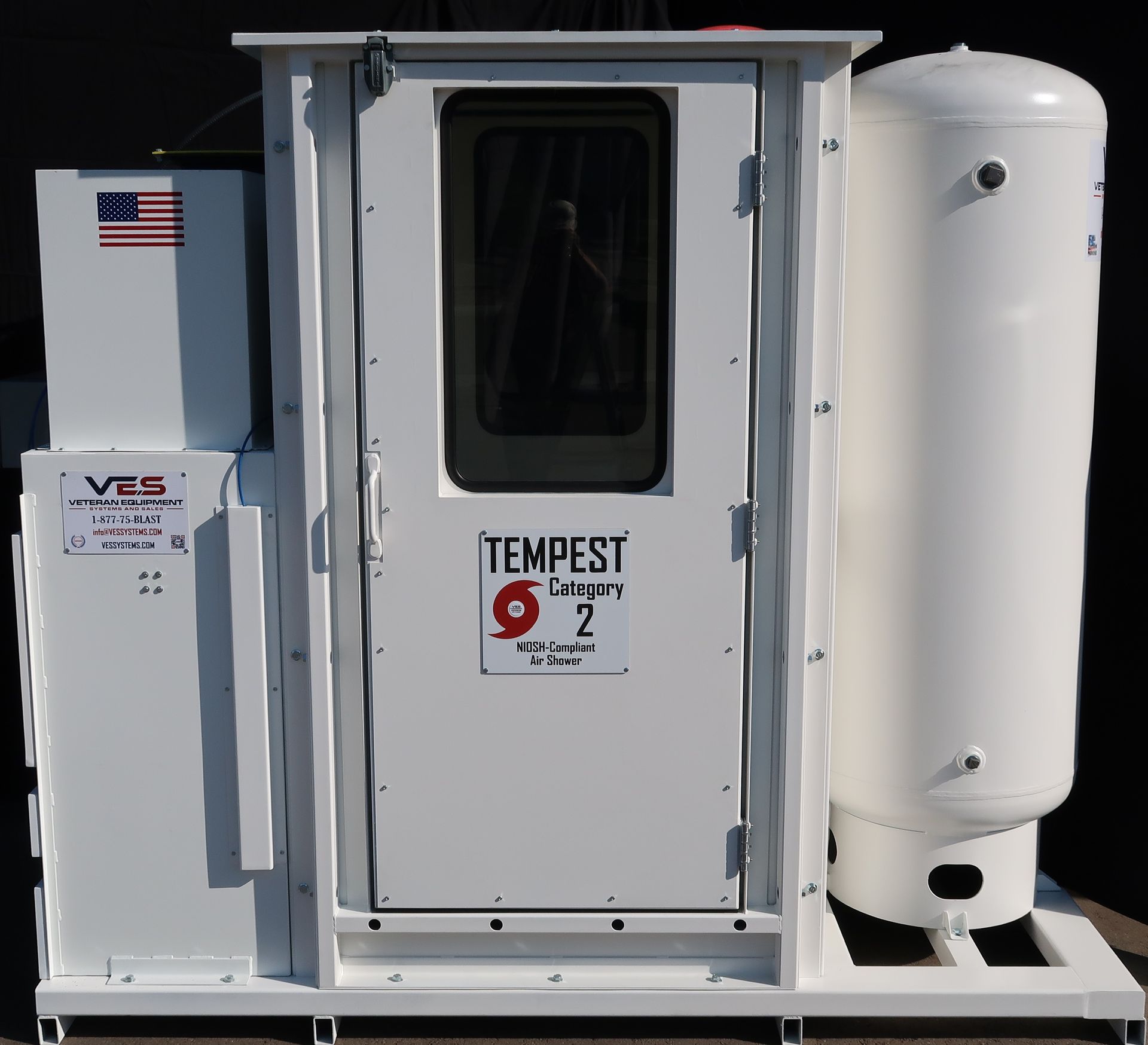
Latest Projects DLA Fulfillment – NIOSH-Compliant Air Showers (Ongoing)
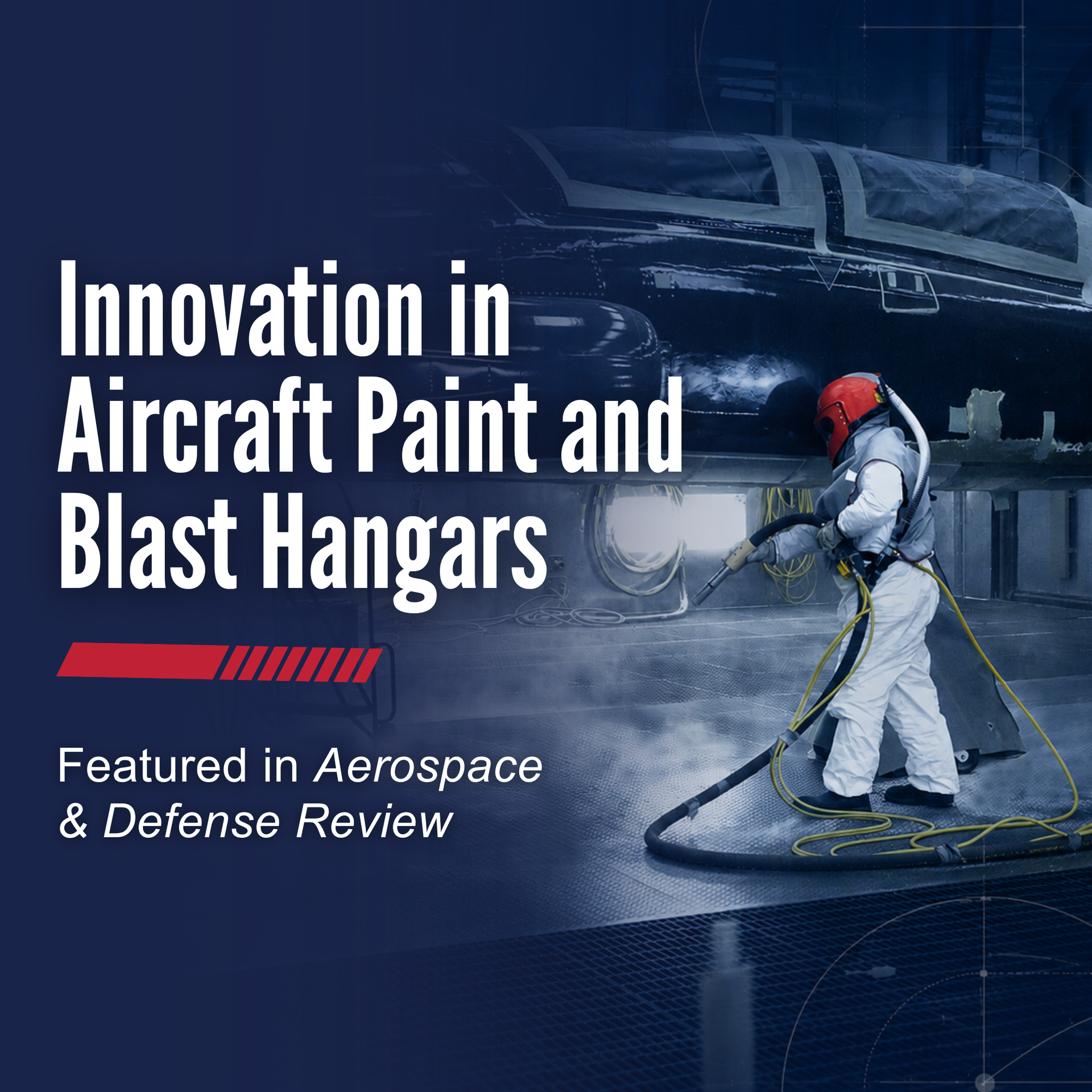
Read VES founder Daniel Myers’ article on innovation, safety, and engineered solutions for aircraft paint and blast hangars.
VES was featured by Aerospace & Defense Review for engineered solutions supporting aircraft paint and blast hangar environments.
VES supported Travis Air Force Base with compressor system solutions for reliable air supply and industrial equipment operation.
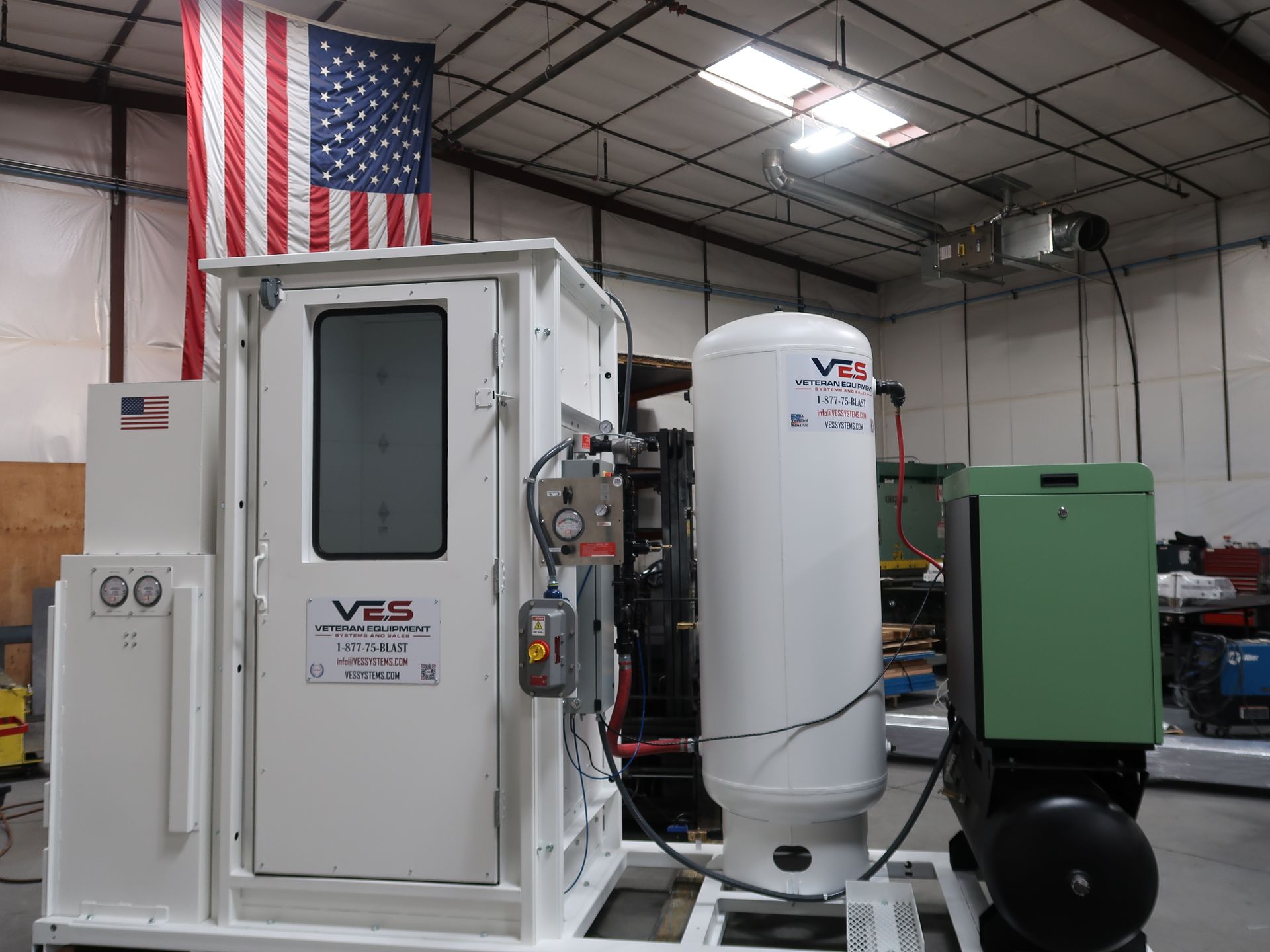
VES provided an industrial equipment system for Freeport-McMoRan designed for demanding facility and operational needs.
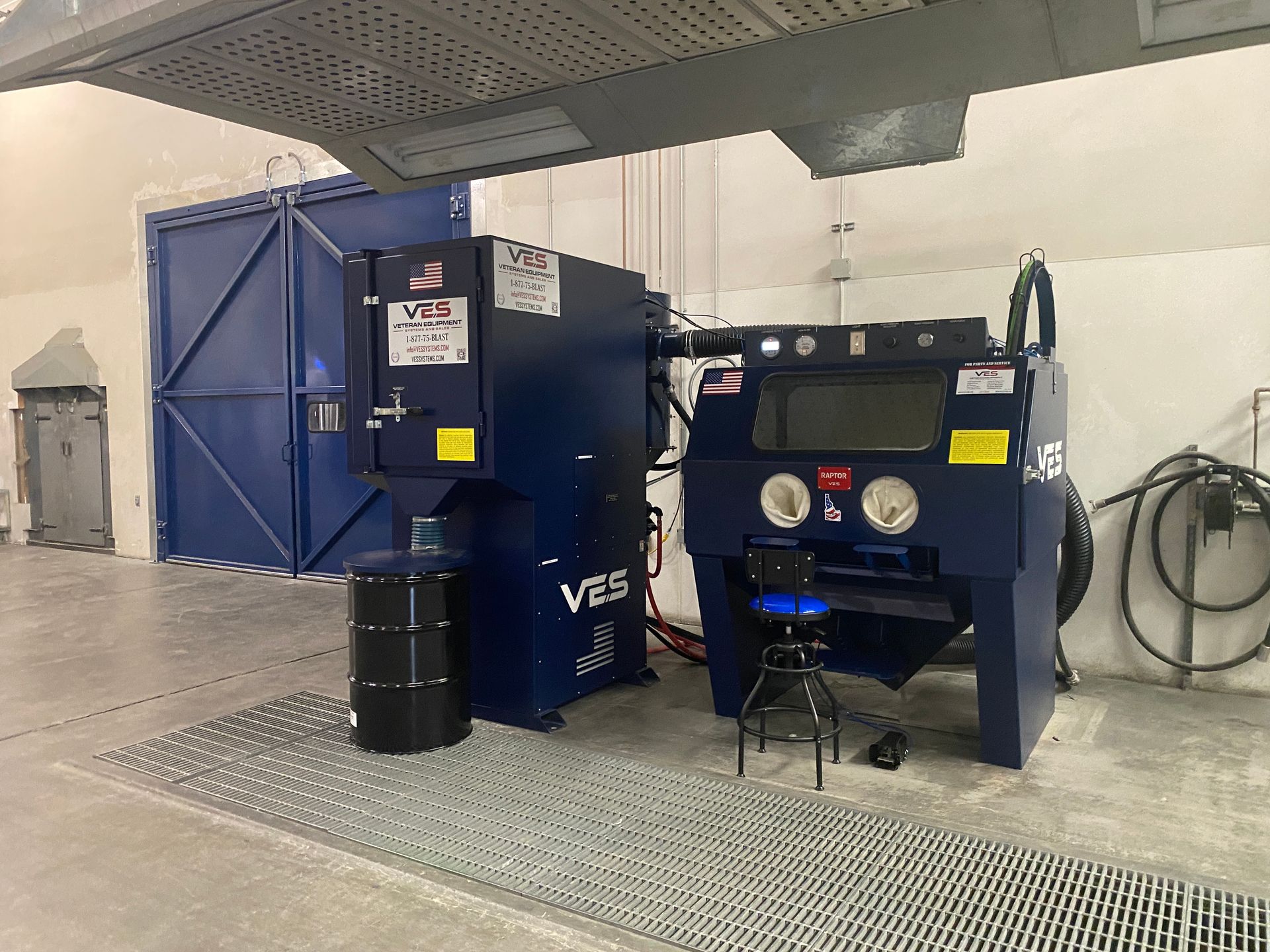
VES delivered a Raptor blast cabinet system for Lewis-McChord to support abrasive blasting performance and operator safety.